


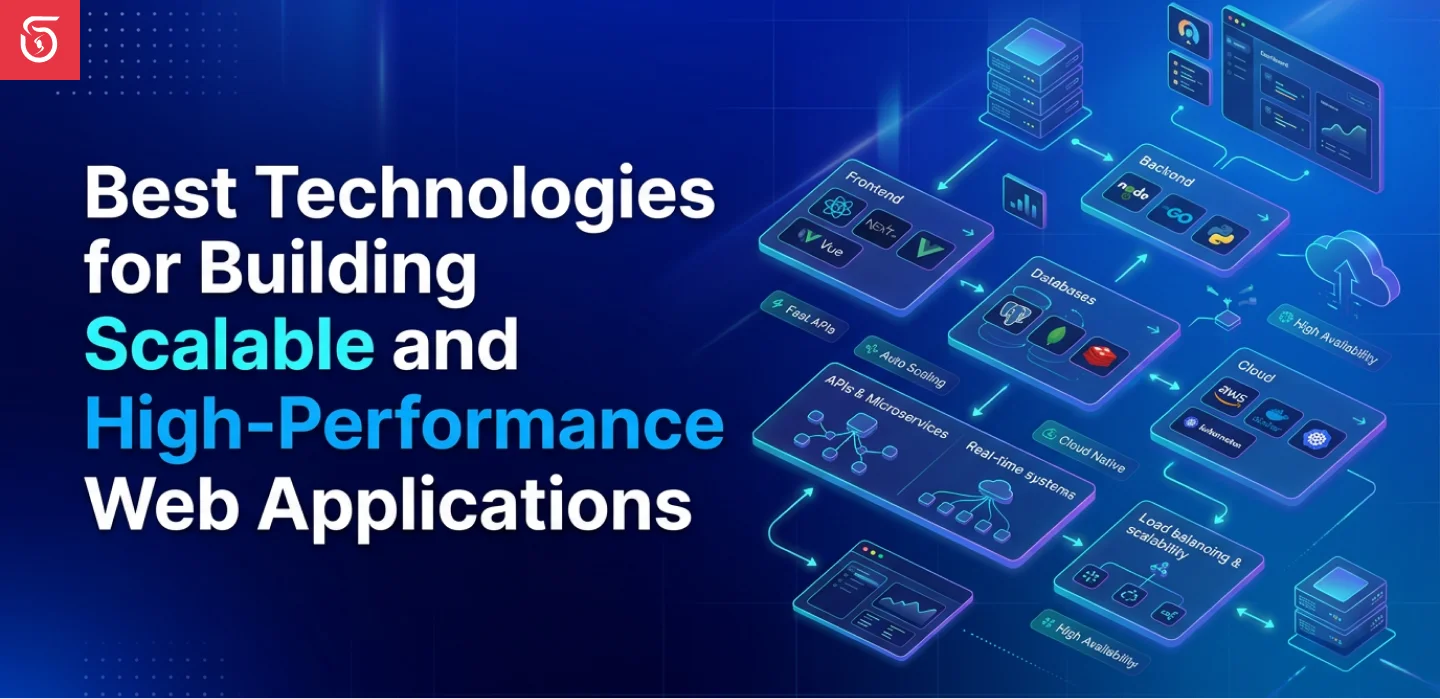
Best Technologies for Scalable High-Performance Web Apps
1. Why Technology Choice Defines Scalability
2. Best Backend Technologies for Scalable Web Applications
3. Best Frontend Technologies for High-Performance Web Applications
4. Databases: Choosing the Right Data Layer
5. Infrastructure and DevOps Technologies That Enable Scale
6. Architecture Patterns That Support Scalability
7. How to Choose the Right Tech Stack for Your Project
8. Final Thoughts on Building Scalable Web Applications
Why Technology Choice Defines Scalability
- ◆Concurrency handling - Can it manage thousands of simultaneous users?
- ◆Horizontal scalability - Can you add more servers/instances seamlessly?
- ◆Latency - How fast does it respond under load?
- ◆Developer productivity - Can your team iterate quickly without sacrificing quality?
- ◆Ecosystem maturity - Does it have strong community support, libraries, and tooling?
Best Backend Technologies for Scalable Web Applications
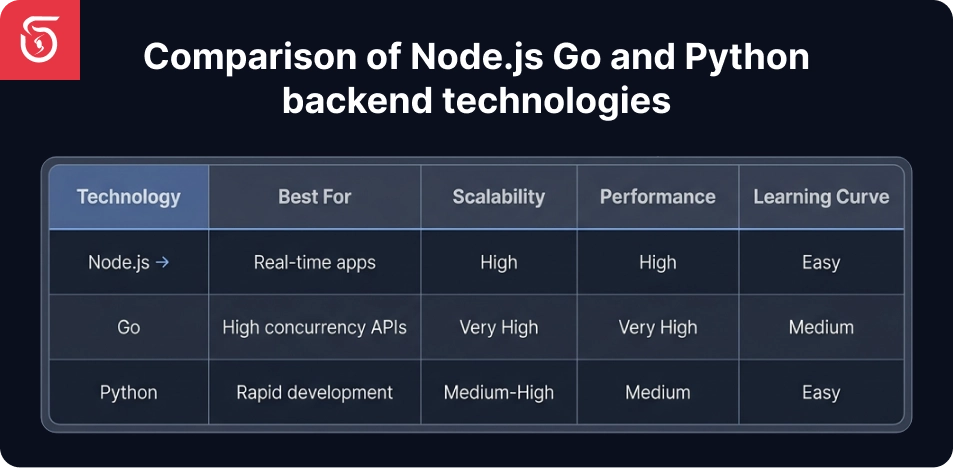
1. Node.js - Non-Blocking I/O for High Concurrency
- ◆Single-threaded event loop manages concurrent connections efficiently
- ◆Lightweight and fast for I/O-heavy operations like APIs and real-time features
- ◆Excellent for microservices architecture
2. Go (Golang) - Built for Concurrency and Speed
- ◆Goroutines are extremely lightweight compared to OS threads
- ◆Compiled language - no runtime overhead
- ◆Excellent standard library for building HTTP services
- ◆Low latency at high throughput
3. Python with FastAPI or Django - Rapid Development at Scale
- ◆FastAPI is one of the fastest Python frameworks available, built on async/await
- ◆Django's ORM and built-in security features accelerate development
- ◆Massive ecosystem with libraries for every use case
- ◆Works seamlessly with Celery for distributed task queues
Best Frontend Technologies for High-Performance Web Applications
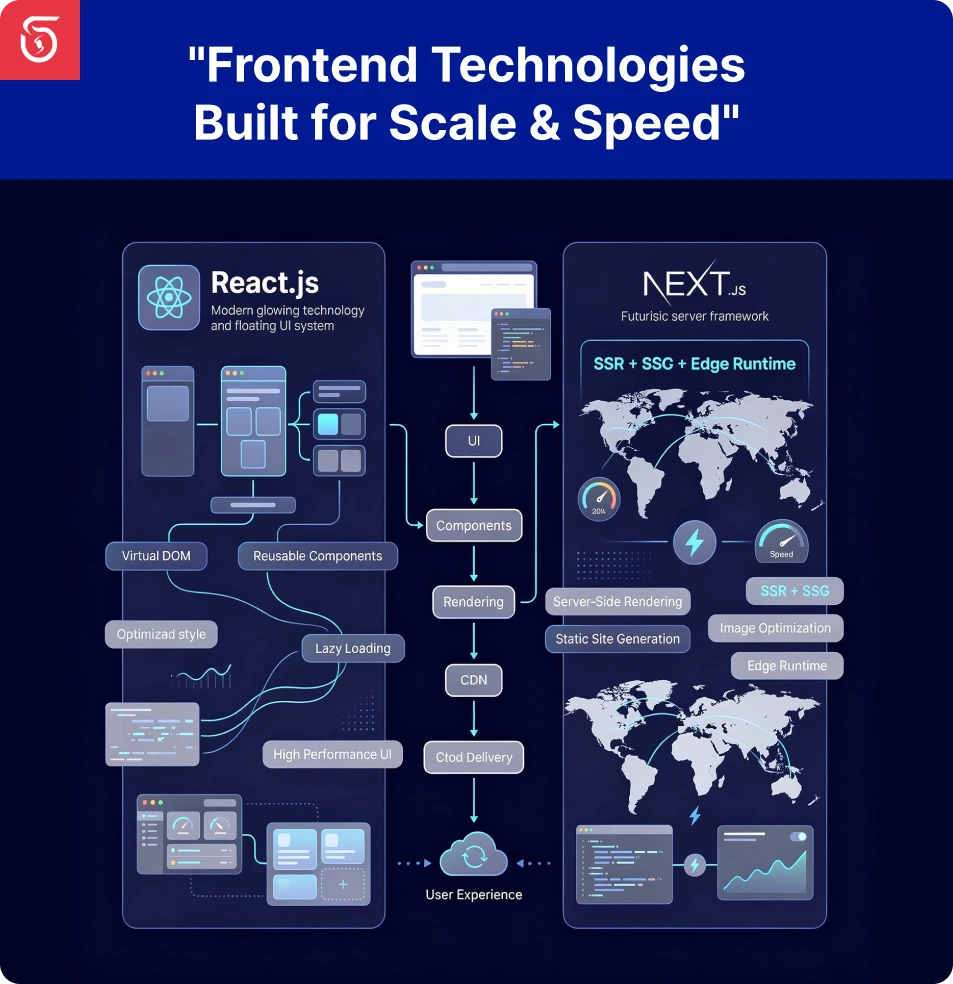
1. React.js - Component-Based UI at Scale
- ◆Virtual DOM reduces unnecessary re-renders
- ◆Server-Side Rendering (SSR) via Next.js improves Time to First Byte (TTFB)
- ◆Large ecosystem with performance-optimized libraries
- ◆Supports incremental static regeneration for content-heavy apps
2. Next.js - The Full-Stack Performance Powerhouse
- ◆Automatic code splitting reduces initial load times
- ◆Edge runtime support for globally distributed performance
- ◆Built-in image optimization, font loading, and caching
- ◆First-class TypeScript support for maintainable codebases
Databases: Choosing the Right Data Layer
1. PostgreSQL - The Gold Standard for Relational Data
2. Redis - Lightning-Fast Caching and Session Management
3. MongoDB - Flexible Schema for Rapid Iteration
Infrastructure and DevOps Technologies That Enable Scale
1. Docker and Kubernetes - Containerization at Scale
- ◆Consistent environments from development to production
- ◆Auto-scaling based on traffic demands
- ◆High availability through self-healing deployments
- ◆Efficient resource utilization across cloud infrastructure
2. CDNs (Content Delivery Networks) - Global Performance
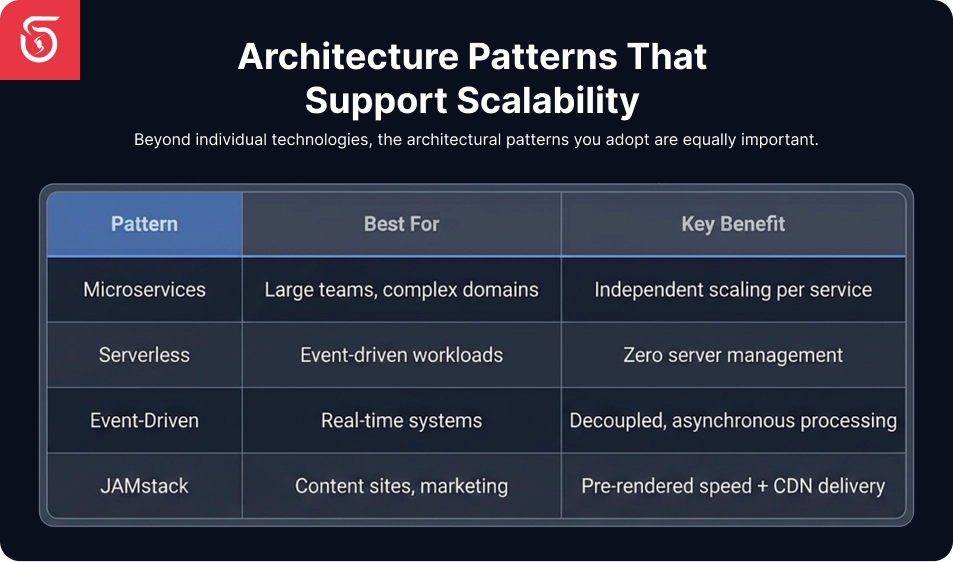
Architecture Patterns That Support Scalability
How to Choose the Right Tech Stack for Your Project
- ◆Define your scale targets early - How many users do you expect in 6 months? In 2 years?
- ◆Evaluate your team's existing expertise - The best technology is one your team can use effectively.
- ◆Consider long-term maintainability - Avoid chasing trends; prioritize technologies with proven ecosystems.
- ◆Prototype critical bottlenecks - Before committing, test your stack under simulated load.
- ◆Plan for observability from day one - Integrate logging, monitoring, and alerting early.

Never Miss an Update
Add SoftSages Technology as a Preferred Source on Google for more of our latest tech content in AI Mode and AI Overviews.
Final Thoughts on Building Scalable Web Applications
Looking for a trusted web application development company to build scalable, high-performance software? SoftSages Technology helps startups and enterprises design cloud-native platforms, SaaS applications, and enterprise systems optimized for long-term growth.
Table of contents
Why Technology Choice Defines Scalability
Best Backend Technologies for Scalable Web Applications
Best Frontend Technologies for High-Performance Web Applications
Databases: Choosing the Right Data Layer
Infrastructure and DevOps Technologies That Enable Scale
Architecture Patterns That Support Scalability
How to Choose the Right Tech Stack for Your Project
Final Thoughts on Building Scalable Web Applications
Join Our Newsletter
Get the latest tech trends, tutorials and expert analysis delivered straight to your inbox.
FAQs about Scalable and High-Performance Web Applications
There is no single "best" option - it depends on your use case. Node.js and Go are excellent for high-concurrency APIs, while Python with FastAPI suits data-driven platforms. The right choice depends on your team's expertise, expected traffic patterns, and the nature of your application.
The database is often the first bottleneck in a scaling web application. Using PostgreSQL for structured relational data, Redis for caching, and MongoDB for flexible document storage covers most use cases. Pairing your database with a proper caching strategy is critical for maintaining performance at scale.
Not necessarily. Microservices introduce operational complexity and are best suited for large teams and complex domains. For early-stage products or smaller teams, a well-structured monolith can scale effectively and is easier to maintain. You can migrate to microservices as genuine bottlenecks emerge.
A CDN reduces latency by serving static assets from servers geographically close to the end user. This can have a massive impact on perceived performance, especially for global audiences. It also offloads traffic from your origin server, improving its ability to handle dynamic requests at scale.
Load testing tools like Apache JMeter, k6, or Locust allow you to simulate thousands of concurrent users against your application. Running these tests before launch helps you identify bottlenecks in your database queries, API endpoints, and infrastructure before real users encounter them.
Yes. Serverless architecture (AWS Lambda, Vercel, Netlify Functions) allows you to pay only for what you use and scales automatically. Managed databases like PlanetScale or Supabase eliminate the overhead of database administration. The key is designing for scalability from the start, even if your initial infrastructure footprint is small.
React and Next.js are widely used for scalable web applications because they support fast rendering, component-based development, Server-Side Rendering (SSR), and performance optimization features. Next.js also improves SEO and page load speed through automatic code splitting and efficient hydration.
Redis helps scalable applications by caching frequently accessed data, managing user sessions, enabling rate limiting, and reducing database load. Its in-memory architecture delivers extremely fast response times, making it ideal for high-traffic applications.