


Cloud Computing Security Risks: A Complete Guide
1. What Is Cloud Security Risk, Really?
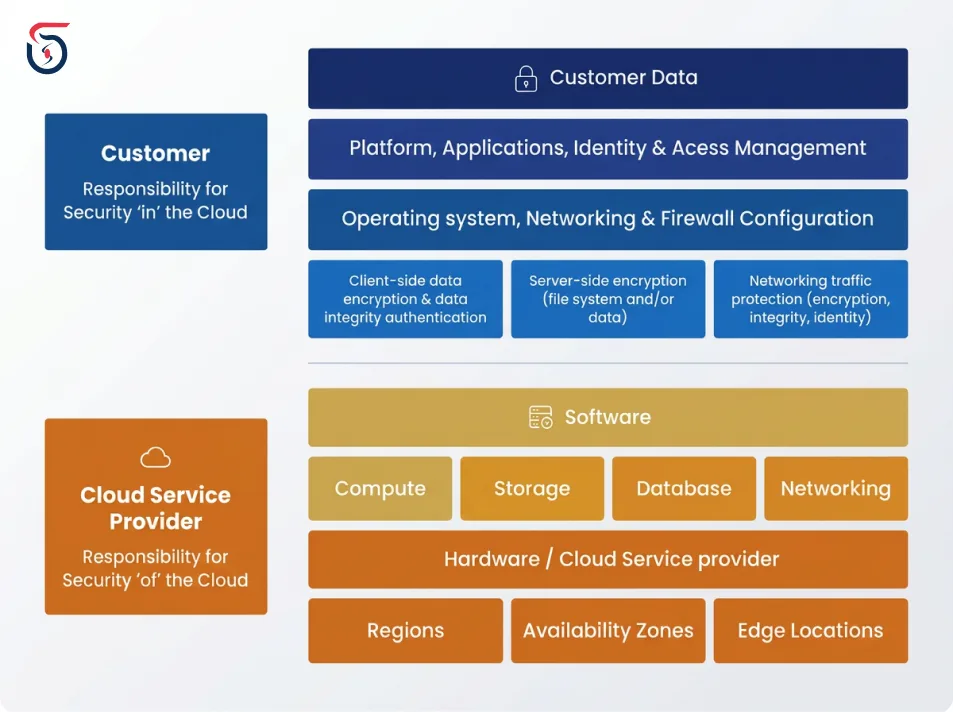
2. The Shared Responsibility Model: Where Risk Actually Lives
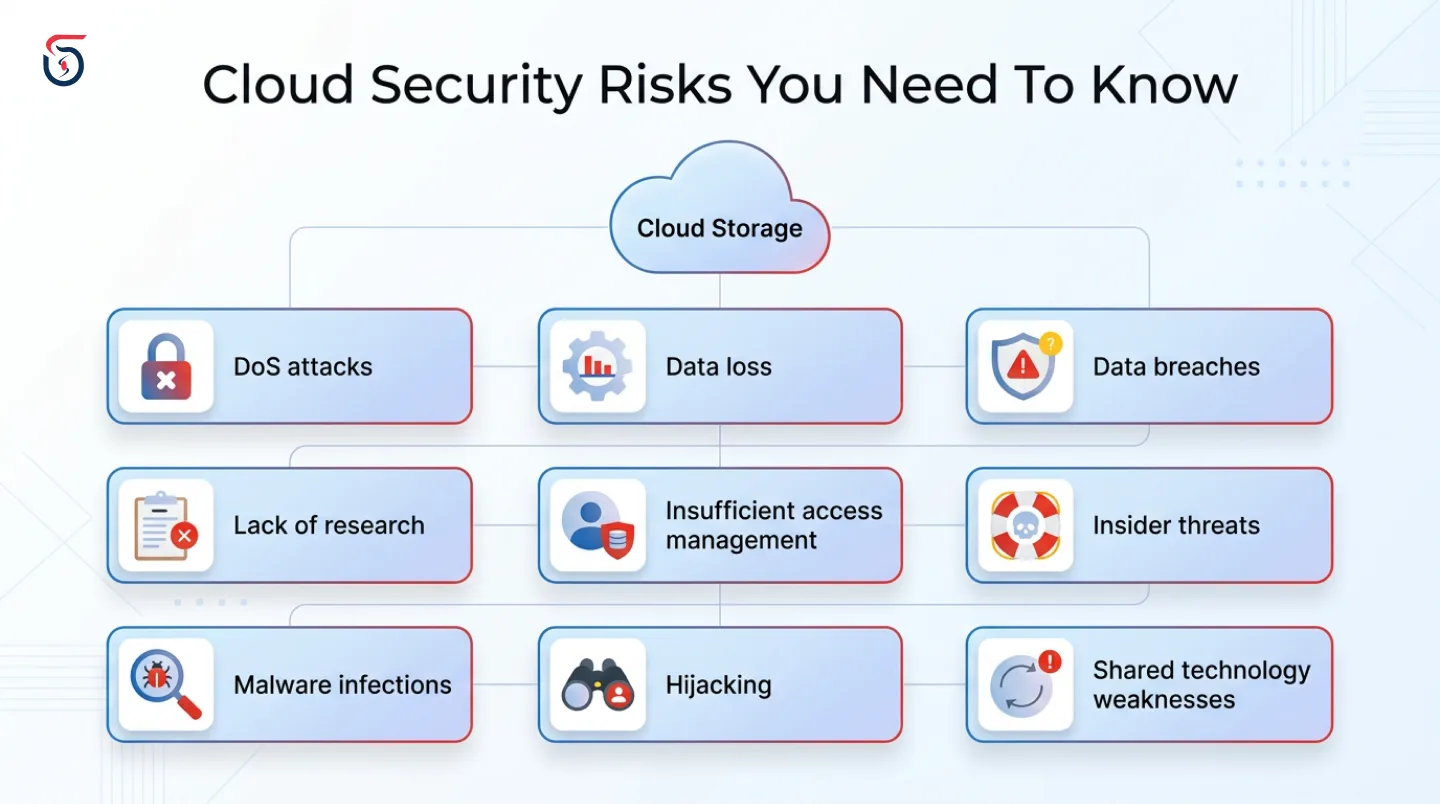
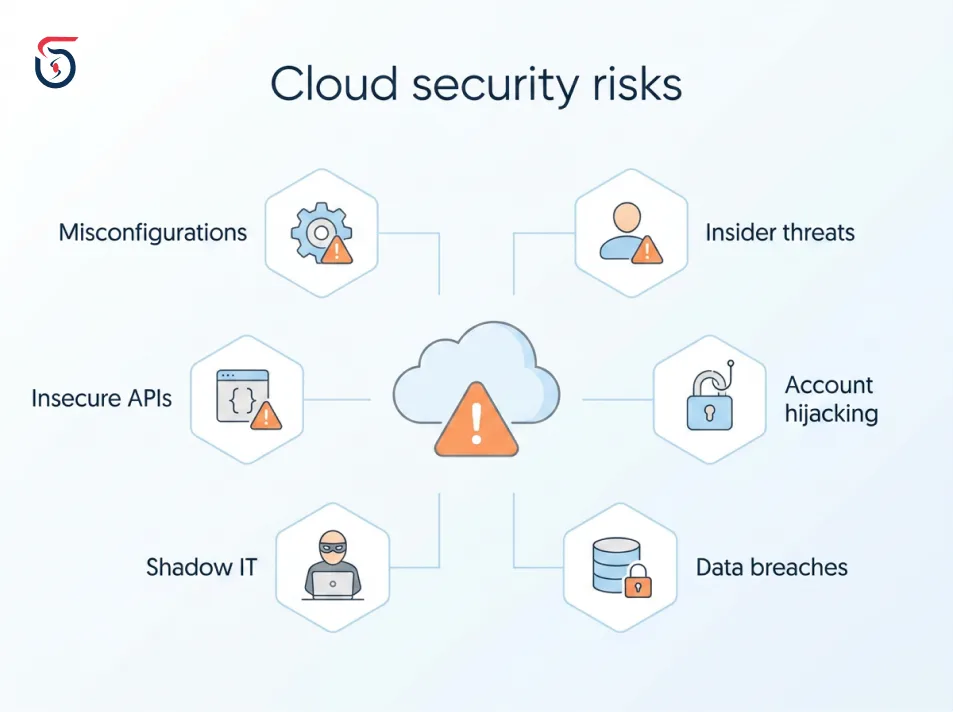
3. Top Cloud Computing Security Risks
4. The Real Cost of Getting Cloud Security Wrong
5. How to Reduce Cloud Computing Security Risks: Practical Steps
6. Final Insights on Cloud Computing Security
What Is Cloud Security Risk, Really?
- ◆Threats are the harmful events themselves, account hijacking, phishing, ransomware, data theft.
- ◆Vulnerabilities are the weak points that make those threats easier to execute, a misconfigured storage bucket, an overprivileged account, an outdated dependency.
- ◆Risk is the business consequence if a threat successfully exploits a vulnerability, downtime, regulatory fines, lost customer trust, or direct financial loss.
The Shared Responsibility Model: Where Risk Actually Lives
- ◆The provider secures the underlying infrastructure, physical data centers, networking hardware, and the virtualization layer.
- ◆Your organization secures everything you put on top of that infrastructure, your data, your configurations, your access controls, your applications, and your identities.
Top Cloud Computing Security Risks
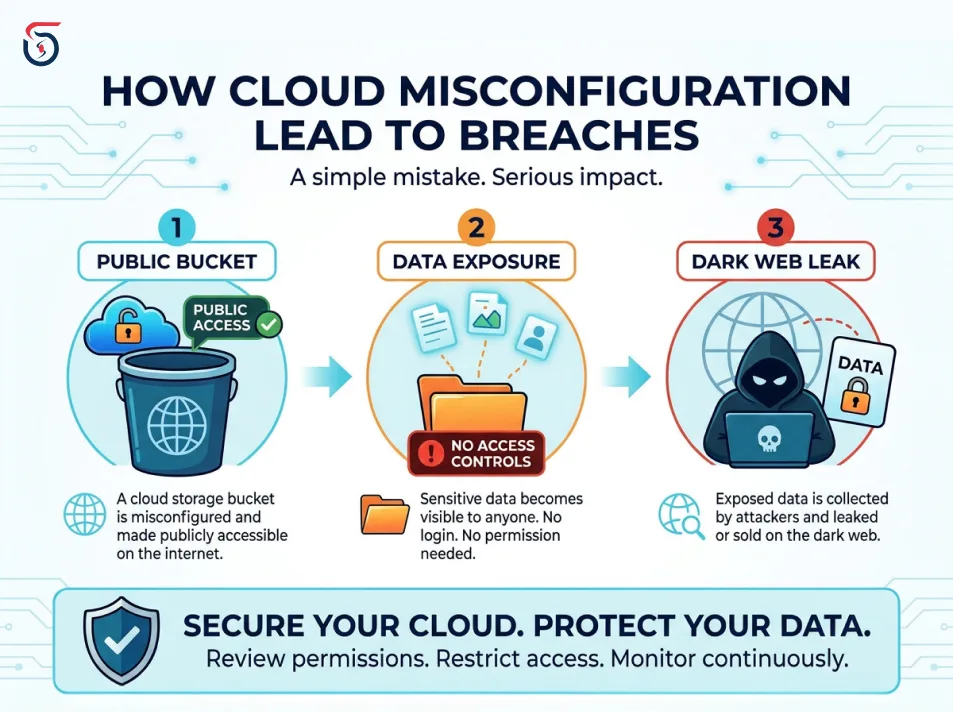
1. Misconfigurations
2. Weak Identity and Access Management (IAM)
3. Insecure APIs
- ◆Broken authentication: flawed session handling lets attackers impersonate legitimate users.
- ◆Broken authorization: access control gaps let users reach data or actions beyond their intended permissions.
- ◆Excessive data exposure: APIs returning more data than the requesting application actually needs.
- ◆Misconfigured API gateways: default settings that leave internal endpoints publicly discoverable.
4. Data Breaches from Inadequate Encryption
5. Insider Threats and Human Error
6. Shadow IT and SaaS Sprawl
7. Supply Chain and Third-Party Vulnerabilities
8. Multi-Cloud and Hybrid Cloud Complexity
9. AI-Driven and Automated Attacks
10. Compliance and Regulatory Risk
The Real Cost of Getting Cloud Security Wrong
- ◆Operational downtime: recovery from a serious cloud security incident, particularly ransomware, can take weeks rather than days.
- ◆Regulatory fines: non-compliance penalties under GDPR, HIPAA, or similar frameworks can be severe, especially for repeat violations.
- ◆Reputational damage: customer trust, once lost to a publicized breach, is consistently harder to rebuild than the technical systems themselves.
- ◆Competitive exposure: leaked trade secrets, source code, or strategic data can erode an advantage that took years to build.
How to Reduce Cloud Computing Security Risks: Practical Steps
- ◆Adopt Cloud Security Posture Management (CSPM). Continuous, automated scanning catches misconfigurations and policy drift before attackers find them, far faster than manual audits ever could.
- ◆Enforce least-privilege access everywhere. Default to minimal permissions, and require justification for anything broader. Review privileged accounts on a recurring schedule, not just when something goes wrong.
- ◆Require MFA without exception. This single control consistently shows up as one of the highest-leverage defenses against credential-based attacks.
- ◆Encrypt sensitive data in transit and at rest. Treat this as a non-negotiable baseline, not an optional upgrade for "sensitive enough" data.
- ◆Secure the CI/CD pipeline. Treat your deployment pipeline as a production system in its own right, with its own access controls and monitoring.
- ◆Build shadow IT discovery into your process. Combine technical discovery tools with approved, genuinely usable alternatives. Employees adopt unsanctioned tools because the sanctioned ones don't meet their needs fast enough.
- ◆Adopt a zero trust framework. Reduce blanket trust based on network location and replace it with continuous, identity- and context-aware verification for every access request.
- ◆Plan for multi-cloud consistency from day one. Standardize identity and policy frameworks across providers rather than managing each cloud's security independently.
- ◆Run regular security assessments and penetration tests. Internal assumptions about what's secure are frequently wrong, an outside perspective and real attack simulation catch what internal reviews miss.

Never Miss an Update
Add SoftSages Technology as a Preferred Source on Google for more of our latest tech content in AI Mode and AI Overviews.
Final Insights on Cloud Computing Security
Not sure how exposed your cloud environment actually is? SoftSages Technology helps businesses identify and close the gaps that lead to real breaches, from misconfigurations and weak IAM policies to insecure APIs and compliance blind spots across AWS, Azure, and Google Cloud. Our cybersecurity team builds layered, proactive protection designed around your actual risk, not a generic checklist. and get a clear, no-pressure assessment of your cloud security posture.
Table of contents
What Is Cloud Security Risk, Really?
The Shared Responsibility Model: Where Risk Actually Lives
Top Cloud Computing Security Risks
The Real Cost of Getting Cloud Security Wrong
How to Reduce Cloud Computing Security Risks: Practical Steps
Final Insights on Cloud Computing Security
Join Our Newsletter
Get the latest tech trends, tutorials and expert analysis delivered straight to your inbox.
FAQs about Cloud Computing Security Risks
The leading risks are misconfigurations, weak identity and access management, insecure APIs, data breaches from inadequate encryption, insider threats, shadow IT, and third-party supply chain vulnerabilities.
It's the division of security duties between cloud provider and customer. The provider secures the underlying infrastructure; the customer secures their data, configurations, identities, and applications running on top of it.
Most cloud breaches trace back to misconfigurations and human error rather than sophisticated hacking. Publicly exposed storage, weak access controls, and missing multi-factor authentication are the most common root causes.
Encrypt sensitive data in transit and at rest, enforce MFA on every account, apply least-privilege access, and use Cloud Security Posture Management (CSPM) tools to continuously catch misconfigurations.
Shadow IT refers to cloud tools or SaaS platforms employees adopt without security team approval or review. It creates blind spots, since security teams can't protect or monitor infrastructure they don't know exists.
They can be, mainly due to the difficulty of enforcing consistent identity and access policies across different providers. Inconsistency between cloud environments is a common point attackers look to exploit.
Attackers increasingly use AI to automate reconnaissance, craft more convincing phishing attempts, and chain exploits together faster, which shortens the time security teams have to detect and respond to an attack.
Common frameworks include GDPR, HIPAA, PCI-DSS, SOC 2, and ISO 27001. Requirements vary by industry and region, and violations can occur from issues like improper data storage location or missing audit trails, independent of an actual breach.
CSPM is a category of tools that continuously scan cloud environments for misconfigurations, policy violations, and risky settings, helping organizations catch and fix issues before attackers can exploit them.
Not inherently. Major cloud providers typically offer stronger baseline infrastructure security than most organizations could build on their own. Risk comes primarily from how the customer configures, accesses, and manages what they put on top of that infrastructure.